Disability Representation in Media: Progress, Pitfalls, and What Better Portrayal Looks Like
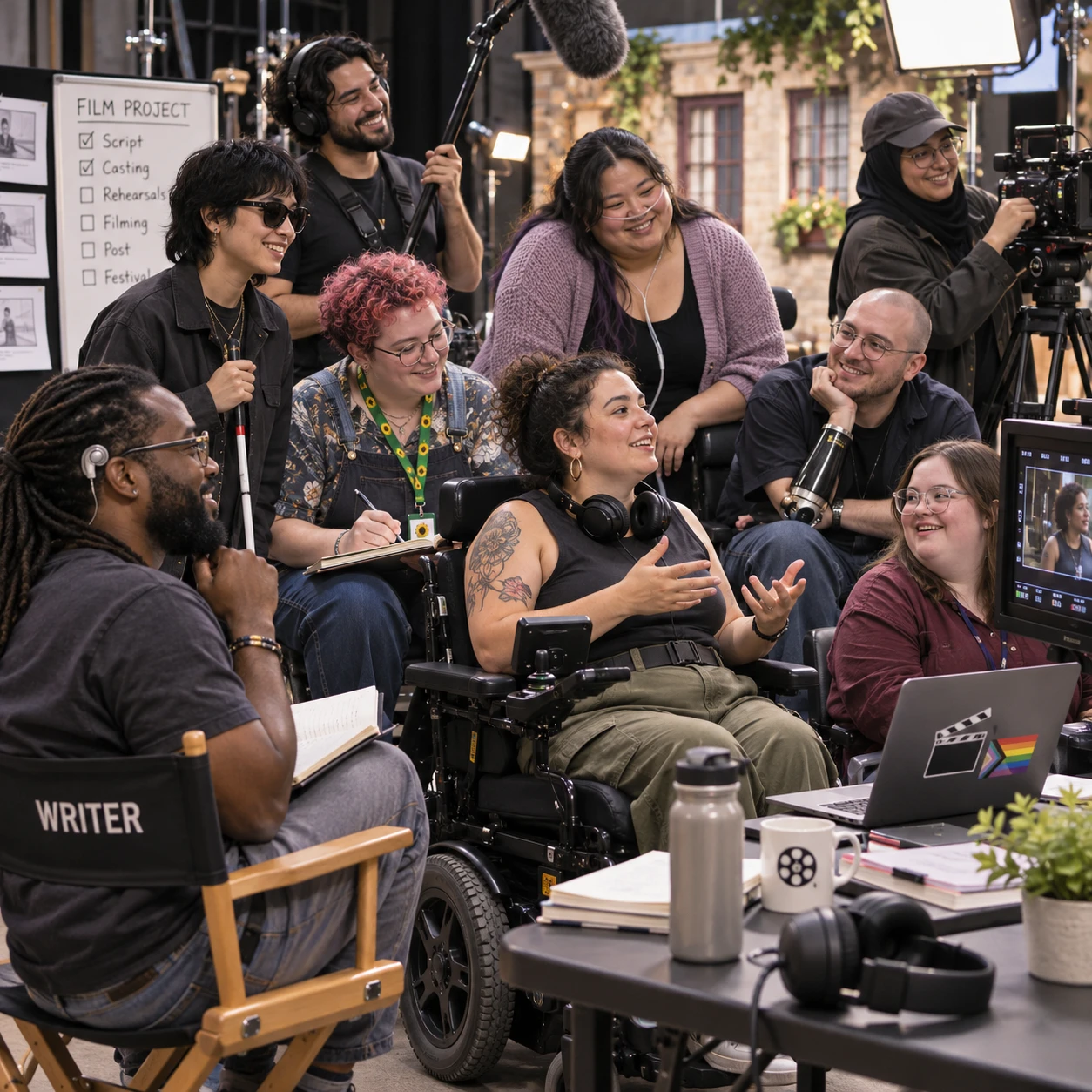
Disability representation in media has become more visible, with disabled characters appearing in a wider range of stories and settings. Yet visibility alone does not guarantee accuracy or respect. The central question is who gets to shape the portrayal, whose experiences appear, and whether disabled people are shown as full participants in everyday life.
Why representation matters
Disability representation matters because media portrayals influence what audiences see as ordinary, possible, and worthy of attention. Thoughtful portrayals can make disabled people more visible while challenging assumptions about independence, communication, work, relationships, and access.
Stories do not single-handedly determine public attitudes, and representation cannot replace accessible services or equal rights. Still, repeated media portrayals can reinforce familiar ideas. If disabled characters appear only as helpless, tragic, or heroic, audiences may have fewer chances to see the range of disabled lives and personalities.
For disabled viewers, seeing a character navigate an inaccessible workplace, negotiate support, fall in love, or simply have a bad day can offer recognition without turning disability into a lesson. For non-disabled viewers, complex characters can make it easier to understand that barriers often come from environments and social expectations, not only from an individual’s body or mind.
The strongest media portrayal gives a disabled character agency: goals, flaws, relationships, humor, and choices that extend beyond disability. Their access needs can matter to the plot without becoming their only defining feature.
Signs of progress
Progress in disability representation shows up when disabled people appear in more kinds of roles and stories, rather than only in narratives about diagnosis or adversity. Broader visibility can include disabled characters as friends, parents, colleagues, leaders, love interests, and protagonists.
There is no single measure of improvement. A useful way to assess it is to look at three dimensions: range (which lives and roles appear), agency (who makes meaningful choices), and authorship (who helps create the story). More variety on screen is a positive sign, but it is stronger when disabled people also shape the work behind the camera.
Some contemporary stories make room for disability as one part of a person’s life, rather than the entire premise. Others explore access barriers or disability rights directly. Both approaches can be valuable. A character does not need to explain disability to the audience in every scene, and a story about discrimination should not be expected to represent every disabled person’s experience.
Improvement also means noticing what remains uneven. Visibility may vary by disability, genre, budget, and distribution. A few well-received characters cannot establish that representation is fair across the industry, so it is better to recognize individual progress without making broad claims the evidence does not support.
Persistent pitfalls and stereotypes
Persistent disability stereotypes reduce disabled people to familiar roles, such as objects of pity, inspirational symbols, villains whose disability signals danger, or burdens for others to manage. These patterns can flatten characters and make disability seem like a moral lesson or personal failure.
The inspiration narrative treats ordinary activities as extraordinary simply because a disabled person does them. The tragedy narrative frames disability itself as a life with no possibility of joy. Another common pattern makes a cure or recovery the only satisfying ending. These stories can overlook the person’s own priorities and the practical barriers that shape daily life.
Tokenism creates a different problem. A production may include one disabled character to signal inclusion, then give that character little development or treat them as a representative of everyone with a similar disability. No single character can stand in for a diverse community.
Another pitfall is defining a character only through diagnosis, symptoms, or support needs. Those details may be relevant, but characters also need motives, boundaries, relationships, and ordinary contradictions. Ask whether the story grants the character choices, or whether other characters make every important decision for them.
Creators can avoid these traps by asking disabled viewers and collaborators what a scene communicates, not just whether a detail is technically correct. The goal is not to ban stories about hardship. It is to avoid suggesting that hardship is the only meaningful story disability can produce.
Authenticity behind the screen
Authentic disability representation is more likely when disabled people have real influence over casting, writing, performance, production decisions, and distribution. Disabled writers, performers, consultants, and decision-makers bring lived knowledge that research alone may miss.
Authentic casting can make a portrayal more grounded and create work opportunities for disabled performers. It can also affect practical choices, such as how a character uses mobility equipment or communicates. However, casting is not a complete test of authenticity: a disabled actor still needs a well-developed role, accessible working conditions, and meaningful creative input.
Consultants can help identify errors, but a late-stage review cannot always repair a script built around a stereotype. Involving disabled collaborators early gives them a chance to shape the premise and character arc, not merely flag problems after key choices are set. Payment, credit, and decision-making authority matter too.
Accessibility behind the scenes is part of this work. Productions may need to plan for accessible auditions, communication formats, set access, schedules, and accommodations. These measures require time and budget, but treating access as a production requirement rather than a last-minute exception makes participation more realistic.
For an overview of disability rights and the broader principle of equal participation, the United Nations Convention on the Rights of Persons with Disabilities provides a useful reference point. Media work does not solve discrimination on its own, but its workplaces can either reproduce exclusion or help change it.
Representation across identities and experiences
Disability is not one uniform experience: it varies across people, communities, settings, and stages of life. Better representation accounts for that variation and recognizes how disability intersects with race, gender, sexuality, class, age, language, and culture.
A wheelchair user, a Deaf person, someone with chronic pain, and a person with an intellectual disability may face different access barriers and social attitudes. Even people with the same diagnosis can have different needs, identities, and preferences. A portrayal that feels truthful to one viewer may not reflect another’s experience.
Intersectionality helps creators notice when a character’s experiences are shaped by more than one identity. For instance, a story about accessing healthcare may involve disability, language access, income, and racial bias at the same time. These factors should not be added as a checklist; they should matter to the character’s relationships, choices, or environment where relevant.
Representation should also include visible and non-visible disabilities, acquired and lifelong disabilities, and people with different communication styles. Not every story needs to cover every group. Across a body of work, though, repeated absence can leave audiences with an incomplete picture.
Creators should avoid treating a community as a research shortcut. Talk with people whose experiences match the character’s circumstances, compensate them for expertise, and allow disagreement. Disabled people do not share a single opinion about language, identity, or what counts as a respectful portrayal.
What better representation can look like
Better disability representation combines specific, rounded characters with accessible production practices and disabled people’s participation in creative decisions. For creators, media organizations, and audiences, improvement starts with asking who has influence and what the story assumes.
For creators and media organizations
- Build characters from the inside out. Give disabled characters goals, relationships, humor, skills, and flaws. Let disability shape some moments without explaining every part of the character through it.
- Bring disabled collaborators in early. Include disabled writers, performers, consultants, and producers at stages where they can affect the story and working conditions. Pay them fairly and make their role clear.
- Check access in the story and on set. Consider barriers, accommodations, and communication without assuming that every disabled person needs the same support. Make production access part of planning and budgeting.
- Review the ending. If a character’s worth or happiness depends on a cure, recovery, or non-disabled approval, reconsider whether that outcome reflects the character’s own aims.
- Make accessibility part of distribution. Captions, audio description, accessible websites, and clear information about formats help more people engage with media.
For audiences and advocates
Audiences can support better work by discussing specific choices rather than treating one film or show as proof that representation is either solved or hopeless. Notice who gets dialogue, agency, and screen time, as well as who is involved in making the project.
Viewers and disability advocates can recommend work by disabled creators, share thoughtful criticism, contact distributors about access, and ask media organizations about inclusive hiring and production practices. Criticism is most useful when it identifies the pattern and its effect, while leaving room for disabled people to disagree about what they want to see.
The practical test is simple: does the portrayal make room for a person, or use disability as shorthand? Progress means more disabled people can tell their own stories, in more forms, with the access and authority to shape how those stories reach an audience.
Frequently asked questions
What makes disability representation authentic? Authentic representation gives disabled characters complexity and agency, reflects relevant lived experience, and involves disabled people in shaping the work. No single portrayal can represent everyone.
Why does casting disabled actors matter? It creates opportunities for disabled performers and can bring lived knowledge to a role. Casting alone is not enough; the role, working environment, and creative process also need to support meaningful participation.
What are common disability stereotypes in media? Common stereotypes include portraying disabled people only as tragic, inspirational, helpless, villainous, or in need of a cure. Token characters and plots that deny disabled people agency can also reinforce harmful assumptions.
How can audiences support better representation? Seek out disabled creators, use accessible media options, offer specific and respectful feedback, and encourage producers and distributors to include disabled people in both creative work and decision-making.